
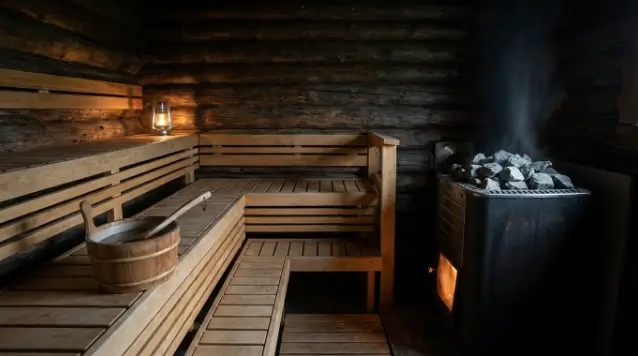
Contrast therapy alternates heat and cold: typically 10 to 15 minutes in a traditional sauna at 170 to 190 degrees Fahrenheit, followed by 1 to 3 minutes in cold water around 50 to 59 degrees, repeated for two or three rounds. The heat side has the stronger long-term evidence, largely from Finnish cohort research linking frequent sauna use with lower cardiovascular event rates. The cold side is genuinely mixed, helpful for some short-term soreness but possibly counterproductive for people chasing pure strength or muscle gains.
What Does a Basic Contrast Session Look Like?
Start in the sauna for 10 to 15 minutes, long enough to raise core temperature and get a real sweat going without pushing past what feels sustainable. Step out, and within a few minutes move into cold water, whether that is a plunge tub, a stock tank with ice, or a natural cold source, for 1 to 3 minutes. Many people find the first 30 to 60 seconds are the hardest part and that breathing steadily through it matters more than gritting through discomfort. Repeat that heat-cold cycle two or three times, and finish on whichever side matches the goal for the day: heat if the aim is to wind down and sleep, cold if the aim is a jolt of alertness. Beginners often do better easing in with one round before building up to a full contrast sequence over a few weeks.
What Does the Sauna Side of the Evidence Actually Show?
The strongest data here comes from long-running Finnish cohort research. A widely cited study following middle-aged men found that more frequent sauna bathing, four to seven sessions a week compared with once, was associated with meaningfully lower rates of fatal cardiovascular events and all-cause mortality over the follow-up period. A related analysis found that the combination of frequent sauna bathing and higher cardiorespiratory fitness carried an even lower associated risk than either factor alone. This is association data from observational cohorts, not a randomized trial proving sauna use prevents heart disease, and it should be read that way. But the consistency across multiple published cohorts is a meaningful signal, and it is the strongest piece of the contrast-therapy pairing.
What Does the Cold Plunge Side of the Evidence Actually Show?
Cold-water immersion research tells a less unified story. A 2025 systematic review and meta-analysis covering a wide range of outcomes found genuine but modest associations with improved short-term recovery and subjective wellbeing measures, without the same long-term cardiovascular signal that sauna research has built up over decades. Separately, research specifically on cold water immersion after resistance training has raised a real concern: repeated post-strength-training cold exposure appears associated with blunted long-term gains in muscle size and strength compared with not cold plunging after those sessions, likely because the inflammation that cold exposure suppresses is part of how muscle actually adapts and grows. A Cochrane review on cold-water immersion for muscle soreness found some benefit for short-term soreness reduction but noted the evidence base has real quality limitations. None of this means cold plunging is harmful broadly, but it does mean pairing it with every single strength session may work against a lifter’s goals even while feeling good in the moment.
Should the Order Change Based on Your Goal?
If the goal is recovery and relaxation, sauna followed by a short cold finish is a well-tolerated pattern that most people find pleasant and sustainable long term. If the goal is maximizing strength or hypertrophy gains from a lifting program, several coaches now suggest keeping cold plunges to non-training days, or waiting several hours after a strength session, based on the research above. There is no evidence pointing to a downside from sauna use itself around training, which is part of why the heat side of contrast therapy has become the default recommendation while the cold side gets a more careful, case-by-case treatment.
What Do You Need to Set This Up at Home?
On the heat side, a traditional cedar or hemlock sauna sized to a 4.5 to 6 kW heater covers most home setups, running 30 to 45 minutes to reach full temperature. On the cold side, a home plunge can be as simple as a large stock tank with bagged ice, though a dedicated chiller unit holding a steady 39 to 55 degrees removes the daily ice-buying chore for people doing this regularly. Placement matters for both: the sauna needs its combustible clearances respected around the heater, and the plunge needs to sit somewhere with drainage and easy access so the walk between hot and cold does not undo the benefit by exposing bare feet to a freezing walkway for too long. For anyone assembling both pieces at once, checking a matched traditional sauna kit against the room’s dimensions, the way SweatDecks lists heater size against room volume on its product pages, is a reasonable starting point for the heat half of the setup even before shopping for the plunge separately.
How Do You Ease Into Contrast Therapy Safely?
Anyone new to either extreme should build up gradually rather than jumping straight into long cold exposure. Start with shorter cold intervals, 30 to 60 seconds, and warmer water than the eventual target, then extend duration and drop temperature over several weeks as tolerance builds. People with cardiovascular conditions, uncontrolled blood pressure, or who are pregnant should talk with a doctor before starting either heat or cold exposure, since both place real, measurable demands on the heart and circulatory system. Alcohol and sauna use is also a documented risk factor worth avoiding entirely, since it impairs the body’s ability to regulate heat and increases fall risk.
Frequently Asked Questions
How do you structure a sauna and cold plunge contrast session?
A common pattern is 10 to 15 minutes in the sauna at 170 to 190 degrees Fahrenheit, followed by 1 to 3 minutes in cold water around 50 to 59 degrees, repeated for two or three rounds, ending on either heat or cold based on preference.
Is contrast therapy better than sauna alone for recovery?
The evidence is mixed rather than settled. Cold-water immersion is associated with reduced short-term muscle soreness in some trials, but several studies also link frequent post-strength-training cold exposure with blunted long-term strength and muscle gains.
Should you cold plunge before or after strength training?
If building strength or muscle is the priority, many coaches suggest saving a cold plunge for a separate day or several hours after lifting, since some research associates immediate post-strength cold exposure with smaller long-term gains.
How cold does the plunge need to be for contrast therapy?
Most home setups run somewhere between 39 and 59 degrees Fahrenheit, with many people starting around 55 to 59 degrees and working colder over time as tolerance builds.
Can you do sauna and cold plunge contrast therapy every day?
Many people do, but anyone with a cardiovascular condition, unstable blood pressure, or who is pregnant should check with a doctor first, since both heat and cold exposure place real demands on the heart.
References
- “Association between sauna bathing and fatal cardiovascular and all-cause mortality events,” JAMA Internal Medicine (2015). PubMed.
- “Joint associations of sauna bathing and cardiorespiratory fitness on cardiovascular and all-cause mortality risk: a long-term prospective cohort study,” Annals of Medicine (2018). PubMed.
- “Effects of cold-water immersion on health and wellbeing: A systematic review and meta-analysis,” PLoS One (2025). PubMed.
- “Effects of cold water immersion after exercise on fatigue recovery and exercise performance: meta analysis,” Frontiers in Physiology (2023). PubMed.
- “Cold-water immersion (cryotherapy) for preventing and treating muscle soreness after exercise,” Cochrane Database of Systematic Reviews (2012). PubMed.
By Rachel Kim

